

The Coverage Gap: How Small Businesses Navigate Unexpected Losses
Unexpected adverse events, including natural disasters, can put small businesses at risk of significant losses or closure. Using findings from the Federal Reserve’s 2024 Small Business Credit Survey (SBCS), this article explores how small businesses respond to a natural disaster, the challenges they face in using insurance to mitigate losses, and possible gaps in insurance coverage.
The views expressed herein are those of the authors and not necessarily those of the Federal Reserve Banks or the Board of Governors of the Federal Reserve System.
Executive Summary
Small businesses are a crucial part of the economy. Unexpected negative shocks such as natural disasters can put enormous stress on these firms. Insurance can play an important role in helping small businesses cover subsequent financial losses. Yet many disaster-affected firms either do not have relevant coverage, do not receive enough funds from insurance when they do have coverage, or choose not to file a claim to cover their disaster-related losses. Key findings from the Federal Reserve’s 2024 Small Business Credit Survey (SBCS) include
- The most common type of loss sustained by disaster-affected firms was business interruption/lost sales (84 percent), yet less than one-third of affected firms carried insurance that covered that type of loss.
- Firms that were affected by a natural disaster in the last year reported insurance-related challenges at higher rates than firms that were not, even if they did not file a claim. Coverage limitations and availability of coverage were each reported by disaster-affected firms at around twice the rate of unaffected firms.
- High cost was the most common insurance-related challenge overall, followed by complicated policies and coverage limitations.
- Eighteen percent of disaster-affected firms sought funds from insurance, of which 38 percent did not receive any payout.
- Among firms experiencing physical damage, 31 percent had neither property nor flood insurance. Even among those with coverage, 58 percent did not seek insurance funds.
Further research is needed to analyze coverage gaps and the barriers that prevent covered firms from seeking and receiving the funds they need in order to recover.
Introduction
Small businesses are integral to the economy, as they employ nearly half of US private sector workers, create economic opportunities in local communities, and help drive growth in the macro economy. Unexpected adverse events, including natural disasters, can put small businesses at risk of significant losses or closure, which can affect both the local and national economy. Natural disasters are useful examples of unexpected shocks, and available data provide observations on how firms respond to them using insurance.
Estimates vary regarding the effects of natural disasters on small businesses. The Federal Emergency Management Agency (FEMA) estimates that 40 percent of affected businesses do not reopen following a natural disaster and that another 25 percent fail within one year (FEMA, 2020). Another study finds that 45 percent of firms surveyed in the aftermath of Hurricane Harvey in 2017 had not fully recovered one year after the storm (Collier et al., 2025).
Insurance can play an important role in helping firms cover financial losses, yet many disaster-affected small businesses either lack relevant coverage, do not file a claim, or do not receive enough funds from insurance to recover from their disaster-related losses. Smaller firms and younger firms, both of which tend to be more financially fragile and less equipped to withstand a shock, are particularly likely to be inadequately insured or uninsured (Battisto et al., 2018).
Using findings from the Federal Reserve’s 2024 Small Business Credit Survey (SBCS), this article explores how small businesses respond to a natural disaster, the challenges they face in using insurance to mitigate losses, and possible gaps in insurance coverage. The 2024 SBCS data suggest that around half of disaster-affected small employer firms did not seek external funds like government assistance, insurance, or nongovernment loans after experiencing disaster-related losses, and only 18 percent sought funds from an insurance policy to cope with these losses. Disaster-affected firms reported insurance-related challenges at higher rates than unaffected firms, even if they did not file a claim. Coverage limitations and availability of coverage were each reported by disaster-affected firms at around twice the rate of unaffected firms. High cost, including high premiums and deductibles, was the most frequently reported insurance-related challenge. These findings indicate that many disaster-affected firms may not be adequately insured to withstand an unexpected loss event such as a natural disaster because of insufficient insurance coverage or a mismatch between the coverage types and the types of losses experienced.
About the Data
The SBCS is a collaborative effort of all 12 Federal Reserve Banks.1 The survey collects data annually from firms with fewer than 500 employees about their business conditions and experiences. The SBCS is distributed to a convenience sample primarily through a network of nonprofit partner organizations and direct email outreach. The questionnaire consists of a core set of questions asked each year, followed by a recurring module for businesses that were affected by a natural disaster and one or more special topic modules that change from year to year. These modules are optional, with around 80 percent of all respondents opting to complete the special topic module(s) each year and around 80 percent of eligible respondents opting to complete the natural disaster module each year. All survey respondents are asked if they sustained losses due to a natural disaster in the preceding 12 months to determine their eligibility to complete the natural disaster module. For the 2024 survey, the special topic module included questions about insurance coverage and experiences.2
This article draws on data collected in 2024 from employer firms in the natural disaster and special topic modules.3 The 2024 survey was fielded from September to November 2024 and drew more than 7,600 responses from small employer firms, defined as firms with at least one paid employee in addition to the owner(s). Over 6,000 small employer firms completed the special topic module, including over 500 disaster-affected firms that also completed the natural disaster module. The SBCS sample frame is limited to firms in operation at the time of the survey. The findings reflect the experiences of only firms that survived the natural disaster they endured, likely underestimating the impact of natural disasters. Table 1 shows the share of disaster-affected firms that carried several important types of insurance coverage, broken out by select firm characteristics. The natural disaster module asks respondents about their experience with a natural disaster over the preceding 12 months, while the insurance module asks respondents about their coverage at the time of the survey. It is possible that respondents changed their insurance coverage between the date of the disaster and the date of survey completion. One study finds that in flood-affected communities, flood insurance policy take-up increases by 8 percent the year of the disaster, likely because of increased salience of the risk in the immediate aftermath of the event (Gallagher, 2014). It is worth noting that if firms increased their insurance coverage between the time of the disaster and the time of the survey, this measure may overstate the level of confidence they had in the insurance coverage in place at the time of the disaster. Firms included in Table 1 completed both the natural disaster module and the special topic module.
Table 1: Firm Insurance Coverage by Select Firm Characteristics
| Type of insurance | Firm age |
Firm size | Annual revenue | |||
| ≤ 5 years (N = 128) |
> 5 years (N = 441) |
0–19 employees (N = 471) |
20–499 employees (N = 98) |
≤ $1 million (N = 388) |
> $1 million (N = 177) |
|
| Property (including building, machinery, etc.) | 55% | 73% | 66% | 86% | 61% | 88% |
| Commercial auto/vehicle | 34% | 59% | 48% | 79% | 42% | 79% |
| Business interruption | 16% | 38% | 29% | 54% | 23% | 55% |
| Flood (if excluded under property policy) | 9% | 19% | 15% | 23% | 12% | 26% |
Economic Impact of Unexpected Disaster Events
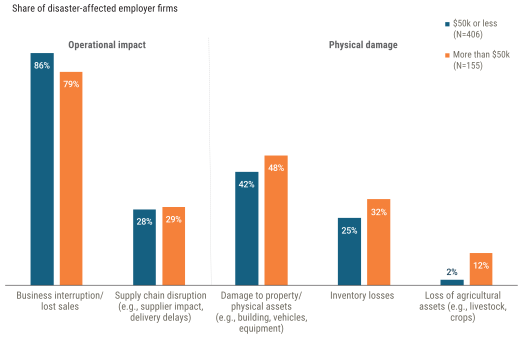
In 2024, there were 27 natural disasters in the United States that caused damage in excess of $1 billion each. The two most costly, Hurricanes Helene and Milton, caused $78 billion and $34 billion in damage, respectively (National Centers for Environmental Information, n.d.).4 One report estimates that the total amount of damage from natural disasters in the United States was $218 billion in 2024 and that about half of those losses were insured (Aon, 2025). Those estimates include, but are not limited to, losses sustained by small businesses. Figure 1 shows the types of losses reported by disaster-affected respondents to the 2024 SBCS, broken out by amount of loss. Business interruption and supply chain disruption are categorized as operational impacts, while property damage, inventory, and agricultural losses are categorized as physical damage.
Business interruption, including lost sales, was by far the most frequently reported type of loss among disaster-affected firms at 84 percent. Twenty-nine percent reported supply chain disruptions. When broken out by total disaster loss amounts, as in Figure 1, operational impacts were similarly common among firms with large (>$50k) and small (≤$50k) losses. Overall, 89 percent of firms reported one or both types of operational impacts.
Physical damage was less common overall than operational impacts, with around half of disaster-affected firms reporting one or more types of physical damage. Physical damage was, however, modestly more likely among firms with losses exceeding $50,000 than among firms with smaller losses. Agricultural losses in particular were more common among firms with larger losses. Despite the higher incidence of each type of physical damage among firms with larger losses, business interruption was the most frequently reported type of loss even among these firms.
In the aftermath of a disaster, businesses require access to capital to cover lost earnings, pay for repairs, and replace damaged equipment or inventory. Insurance can play an important role in covering these expenses, yet many firms do not use insurance after experiencing losses from a natural disaster. Eighteen percent of disaster-affected SBCS respondents sought funds from their insurance policies in response to the natural disaster. Collier et al. (2025) similarly found that 15 percent of small businesses with financial need following Hurricane Harvey in 2017 used insurance payments to fund their recovery. SBCS data show that some disaster-affected firms did not seek funds from their insurance companies because they did not have the relevant coverage. Specifically, 31 percent of firms that experienced physical damage had neither property nor flood insurance. Some firms chose not to seek funds from insurance even when they had relevant coverage. Among firms that experienced physical damage and did have either property or flood insurance, 58 percent did not seek insurance funds. Firms may choose to self-insure against some adverse events, or to forego a claim when they do have insurance, for a variety of reasons. Understanding such decisions is beyond the scope of the data in this survey and presents an opportunity for future research. The following sections will explore some of the insurance-related challenges disaster-affected firms experienced and whether they perceived their coverage as adequate.
Insurance-Related Results
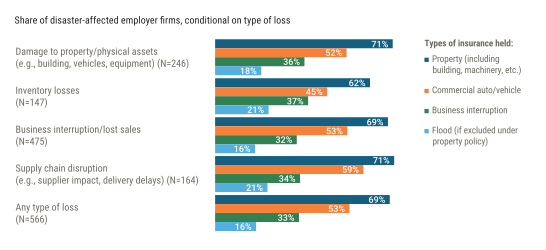
Recovering from an unexpected loss often proves challenging for disaster-affected firms. Some of those challenges result from difficulty accessing credit, government programs, or other resources, including insurance following an unexpected loss due to a natural disaster. The degree to which the types of insurance held by firms align with the types of losses they experience can complicate firms’ recovery efforts. Figure 2 shows the types of coverage that SBCS respondents reported carrying, broken out by the types of losses they experienced.
While nearly 90 percent of firms that experienced a disaster-related loss reported operational impacts like business or supply chain interruption, less than one-third of disaster-affected firms reported carrying a policy that covers such losses. The types of coverage firms held did not differ substantially by the types of losses they experienced. This finding illustrates a potentially significant protection gap for disaster-affected firms that could be an obstacle to their recovery.
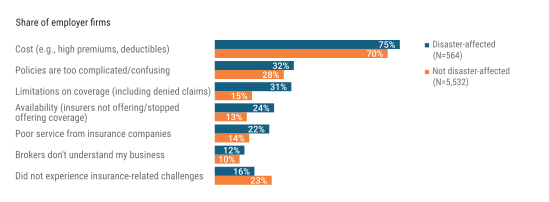
Firms reported facing several challenges finding and securing proper insurance coverage. Results from the 2024 SBCS shown in Figure 3 suggest that these challenges were often related to cost and information gaps. In 2024, 75 percent of disaster-affected employer firms reported that the cost of insurance was a challenge for their business, and one-third of these firms found complicated or confusing policies to be a challenge. Disaster-affected firms cited these two challenges at slightly higher rates than unaffected firms, and they cited limitations on coverage and availability of coverage at twice the rate of unaffected firms.
When disaster-affected firms do seek external funding, including by filing an insurance claim, they often do not receive enough funds to cover their losses. In 2024, 18 percent of disaster-affected firms filed insurance claims. Of these firms, 62 percent received some funds. Disaster-affected firms had difficulty obtaining funds from other sources, as well. Forty percent of these firms sought funds from other external sources such as government assistance, nonprofits, crowdfunding and donations, or nongovernment loans. Thirty-seven percent of those firms received some funding from those other sources. Notably, only 4 percent of disaster-affected firms that sought funds from any external source received enough to cover their losses.
Despite the difficulty firms seem to have in obtaining sufficient funds from their insurance company following a natural disaster, disaster-affected firms were fairly confident that they had adequate insurance coverage. Seventy-five percent of disaster-affected firms were at least somewhat confident that they had adequate coverage. This share was lower than for unaffected firms (nearly 90 percent) but remains notable considering the insurance-related challenges disaster-affected firms experienced, including difficulty obtaining funds. It is worth noting that if firms increased their insurance coverage between the time of the disaster and the time of the survey, this measure may overstate the level of confidence they had in the insurance coverage in place at the time of the disaster.
Alternative Actions
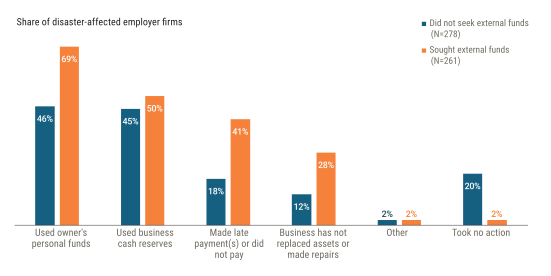
The 2024 SBCS data show that when faced with an unexpected shock such as a natural disaster, around half of firms sought external funds to cope with the loss. Among firms that did seek external funds, 4 percent received enough to cover the full amount of the loss they experienced. Figure 4 shows the actions taken by the remaining 96 percent of disaster-affected firms that had losses exceeding the amount of external funds they received.
When external sources of funds did not cover the full amount of their losses, firms often used cash reserves or personal funds. Firms may draw on these funds because they’ve made a rational decision to either forgo coverage and self-insure or to cover the costs directly rather than filing a claim through a policy they do carry. The other actions firms reported taking when external funds did not fully cover losses were more likely to signal financial hardship, particularly missed or delayed payments. Among firms that had losses not fully covered by external funds, nearly one-third missed or delayed payments.
Conclusion
Data from the natural disaster and special topic modules in the 2024 SBCS suggest that a gap remains in firms’ ability to recover following unexpected losses even after exhausting external funding sources, including insurance. Some of that gap is due to firms’ not having enough coverage or the right types of coverage, and some is due to firms’ not seeking funds from policies they do have. SBCS data do not allow for precise identification of these causes. Further research leveraging additional data sources could provide deeper insight into possible coverage gaps and the barriers that prevent covered firms from seeking and receiving the funds they need to recover.
Tenisha Brown is a senior supervisory policy analyst in the Division of Consumer and Community Affairs at the Federal Reserve Board.
Jordan Manes is a senior policy analyst for the Small Business Credit Survey at the Federal Reserve Bank of Cleveland.
Endnotes
- See fedsmallbusiness.org for additional information about the Small Business Credit Survey. ↩︎
- See the 2024 SBCS questionnaire for the full set of questions asked in the survey. ↩︎
- SBCS data are typically weighted by several firm and owner characteristics to match population distributions of those characteristics. Since no population control data are available for the universe of firms affected by natural disasters, data from these modules are reported without weights applied and therefore may not be representative of the full population of small businesses affected by natural disasters. ↩︎
- 2024 was above the five-year average (2020–2024) of 23.0 events (CPI-adjusted). ↩︎
References
- Aon. 2025. “Climate and Catastrophe Insight.” https://assets.aon.com/-/media/files/aon/reports/2025/2025-climate-catastrophe-insight.pdf.
- Battisto, Jessica, Laura Choi, Claire Kramer Mills, Elizabeth Mattiuzzi, Emily Ryder Perlmeter, and Samuel Storey. 2018. “2017 Small Business Credit Survey Report on Disaster-Affected Firms.” Small Business Credit Survey, no. 20180417 (April). https://doi.org/10.55350/sbcs-20180417.
- “Billion-Dollar Weather and Climate Disasters | National Centers for Environmental Information (NCEI).” Accessed July 1, 2026. https://www.ncei.noaa.gov/access/billions/.
- Collier, Benjamin L., Lawrence S. Powell, Marc A. Ragin, and Xuesong You. 2025. “Financing Negative Shocks: Evidence from Hurricane Harvey.” Journal of Financial and Quantitative Analysis 60
(3): 1342–72. https://doi.org/10.1017/S0022109024000103. - “Fed Small Business.” Accessed July 1, 2026. https://www.fedsmallbusiness.org/.
- FEMA. 2020. “Ready Business Hurricane Toolkit.” https://www.ready.gov/sites/default/files/2020-04/ready_business_hurricane-toolkit.pdf.
- Gallagher, Justin. 2014. “Learning about an Infrequent Event: Evidence from Flood Insurance Take-Up in the United States.” American Economic Journal: Applied Economics 6 (3): 206–33. https://doi.org/10.1257/app.6.3.206.
Suggested Citation
Brown, Tenisha, and Jordan Manes. “The Coverage Gap: How Small Businesses Navigate Unexpected Losses.” 2026. Small Business Credit Survey. Federal Reserve Banks. https://doi.org/10.55350/sbcs-20260922